Guénée reports
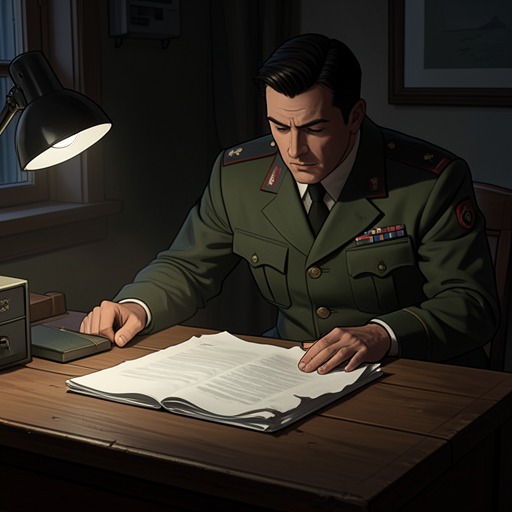
An Officer and a SpyThe Guénée reports are intelligence documents presented as evidence of a German spy within the intelligence section, but Picquart identifies their account as fabricated. Their importance lies not only in the allegation they carried: their use in court exposed how unsupported claims could be passed through the secret dossier and then treated as proof against Alfred Dreyfus. By the time Fernand Labori considered testing the report’s provenance, its named intermediary could not be called and its author was dead.
The allegation and its supposed source
The reports attributed the story to Guénée, an officer of the French Sûreté: the Spanish military attaché, the marquis de Val Carlos, had supposedly told him that the Germans had a spy in the intelligence section. The claim thus depended on a chain of reported speech, rather than on testimony from the alleged source himself. In Picquart’s account, Major Henry later invoked the same story, saying that Val Carlos had told him about it three months after Guénée’s report. Henry then used it against Alfred Dreyfus at the original court martial.
That sequence gave the report a second life in the case. What began as an alleged tip passed through Guénée and was repeated by Henry as support against Dreyfus. Picquart does not treat repetition as independent confirmation: he says the report was falsified and points to its language as wrong. The account supplied no reliable foundation for the accusation simply by appearing in more than one person’s version of events.
Picquart’s challenge to its credibility
Picquart says he raised the report with Guénée soon after discovering it. He recalls Guénée looking shifty, an observation that reinforced his suspicion but did not itself establish how the document had been made. His stated grounds are stronger and more specific: he was certain it had been falsified, and he considered its language inconsistent with an authentic report. The narrative leaves the underlying wording unquoted, so the reader is told Picquart’s assessment without being given the text to examine independently.
The distinction matters because the report’s purported source was a named diplomatic figure, not a witness whose statement had been tested in court. When Labori asks whether Val Carlos should be summoned to confirm that he had ever made the claim, Picquart replies that he could try, while doubting that Val Carlos would appear because of diplomatic immunity. The possible check on the report therefore carried an immediate procedural obstacle: its alleged originator might not be available to answer for it.
Reappearance in open court
At the Rennes proceedings, Auguste Mercier speaks for three hours, bringing documents from a black leather case and passing them along the judges. Among them are fabricated Guénée reports about a spy in the intelligence department. Mercier does not name Val Carlos as the source. This omission makes the report’s evidentiary weakness especially pertinent: the judges receive the claim without the identity of the person who supposedly supplied it.
Mercier’s decision to introduce secret-dossier material in open court creates a different vulnerability. Picquart observes Fernand Labori watching him as if puzzled by what Mercier is doing, and thinks Labori could attack the decision through cross-examination. The document’s journey from concealed file to public testimony thus risks reversing its intended force. Instead of settling the accusation, its appearance gives the defense an opportunity to probe the provenance and handling of the evidence.
A record with no available author
When Labori asks whether he can tackle Mercier about the report, Picquart confirms that it was falsified and suggests calling Guénée. Labori replies that Guénée died five weeks earlier; the medical certificate gives the cause as cerebral congestion. The exchange closes off the most direct route to questioning the report’s author. Val Carlos may also be shielded from appearing, so both the author and the alleged original source are beyond the defense’s straightforward reach.
Labori describes the secret file as a blood pact, grouping Guénée with Sandherr, Henry, and Lemercier-Picard. The remark links the report’s fate to the broader problem of evidence that passed among intelligence personnel without being openly tested. In the case of the Guénée reports, the accusation persists in official proceedings even as its supposed chain of verification breaks down: Picquart calls the document false, Mercier presents it without identifying Val Carlos, and Guénée’s death prevents Labori from questioning its author. The report’s significance is therefore inseparable from the procedural failure that allowed an allegation to circulate as evidence while obstructing scrutiny of where it came from.